Sustainable diving

Small choices add up.

A dive operation will always leave a footprint. We try to make ours smaller — from how we dive, how we power and clean our boat to what we use, reuse and compensate.

Green Fins member CO₂ compensated since 2019 No diesel generator PADI Green Star Award
The PADI Eco Center mark

PADI 5★ Eco Dive Center

Thailand's first PADI Eco Center.

Aloha Diving became Thailand's first PADI Eco Center in 2023. The recognition combines Green Fins environmental standards with active participation in PADI AWARE's Adopt the Blue programme — bringing together how we operate, how we dive and how we contribute to conservation.

PADI Eco Dive Center recognition is renewed annually, so maintaining it means continuing to meet those standards year after year.
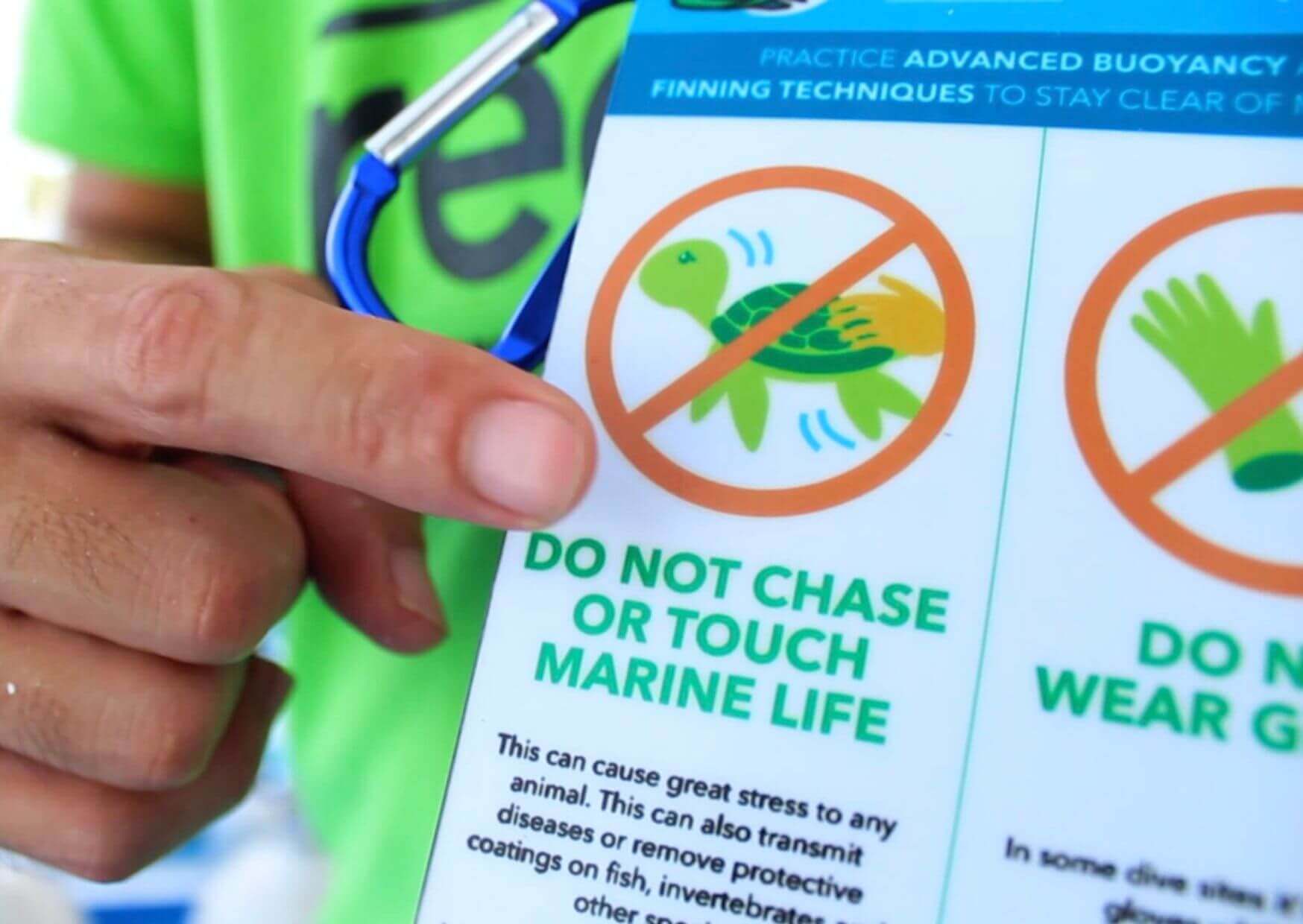
A hand in a Green Fins shirt holding a laminated diver code-of-conduct card, the panel reading do not chase or touch marine life facing the camera

Green Fins

Better diving practices for healthier reefs.

Green Fins is an international initiative that helps dive and snorkel operators reduce their environmental impact through practical standards and training. As a Green Fins member, we follow its best practices both above and below the water.

They cover everything from buoyancy and finning techniques to wildlife interaction, photography, reef-safe sunscreen and safely collecting marine debris.

Green Fins also offers a free Diver e-Course if you'd like to learn more about reducing your impact underwater.

Good intentions are better when they come with instructions.

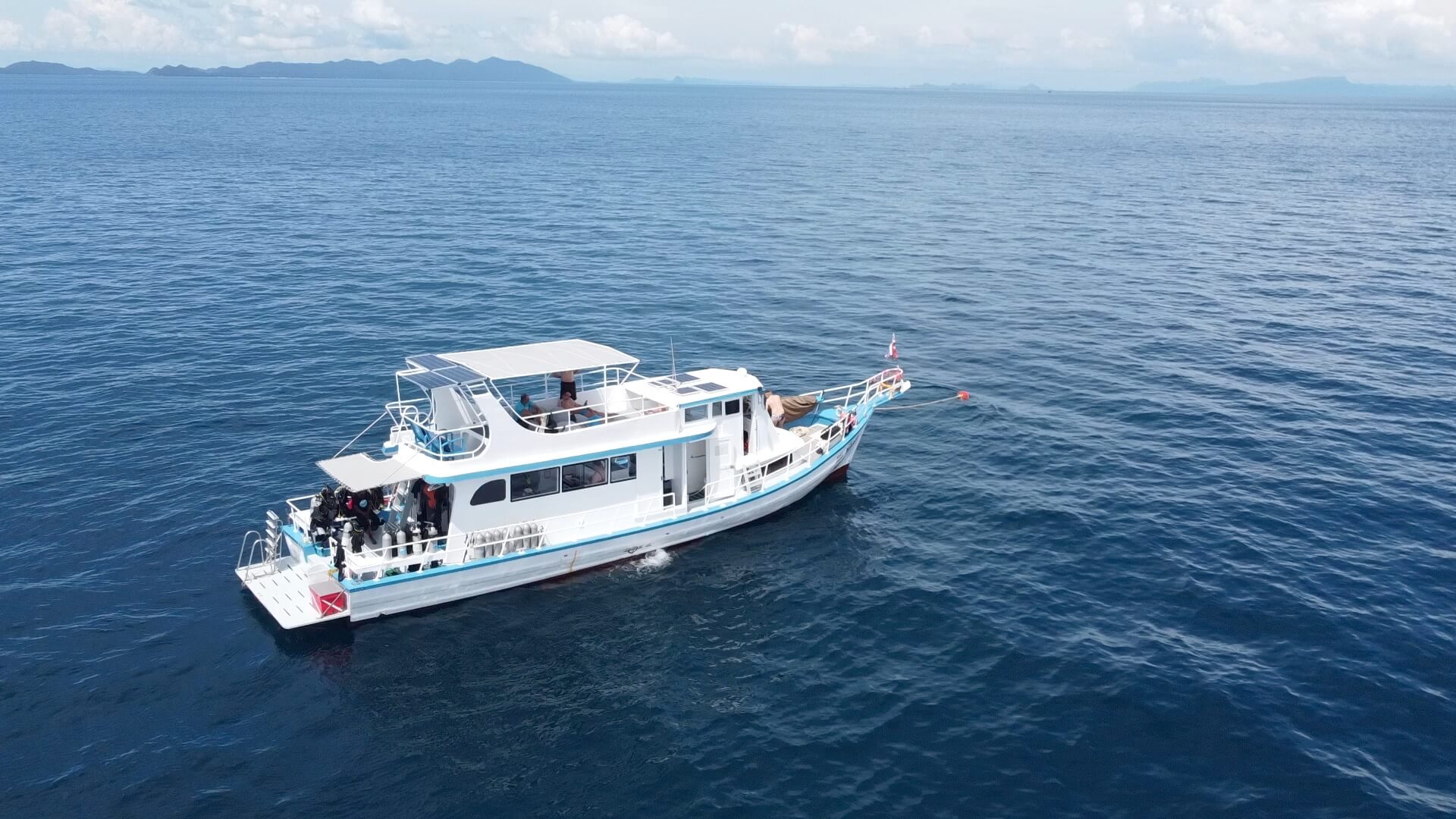
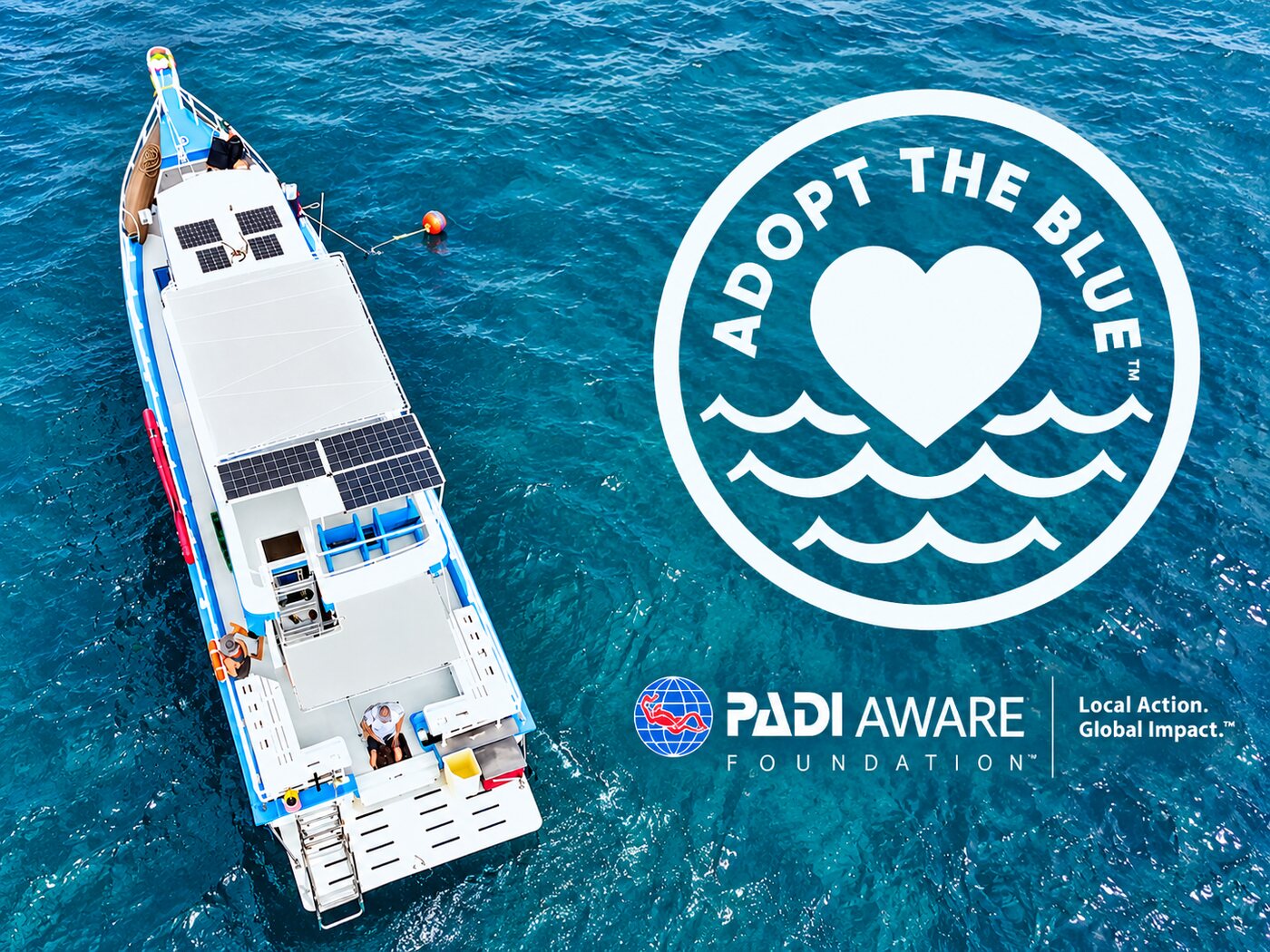
MV Matchanu from above at Koh Mai Thon with the Adopt the Blue heart and the PADI AWARE Foundation mark

PADI AWARE – Adopt the Blue

More than a place we dive.

Through PADI AWARE's Adopt the Blue programme, we have adopted Koh Mai Thon as our conservation site. We regularly dive along around half of its coastline, collecting marine debris and contributing observations on biodiversity, fish populations and shark and ray sightings.

Our Dive Against Debris dives turn visits to a site we know well into something more — a chance to remove what doesn't belong there and keep track of what does.

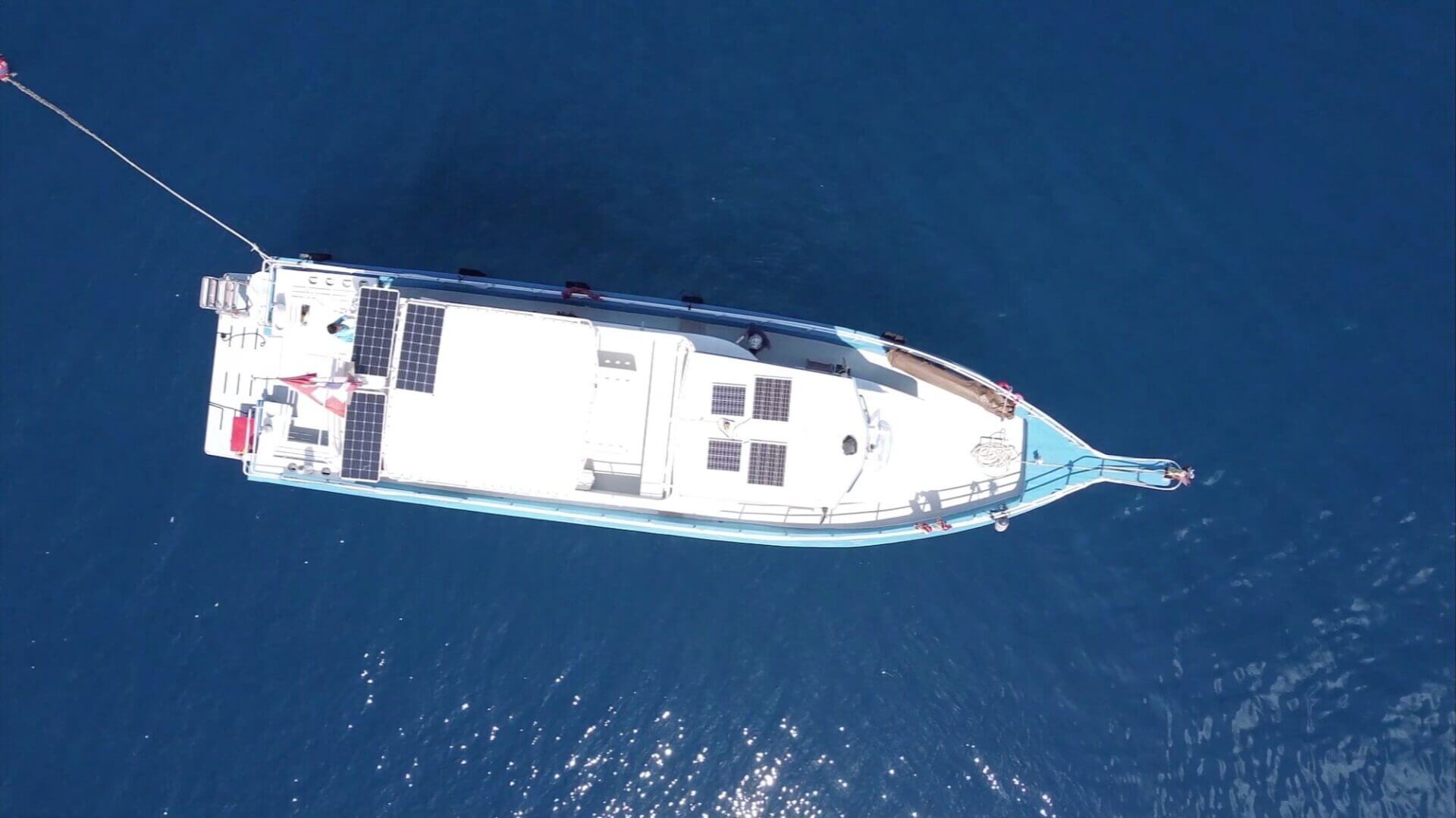
MV Matchanu seen from directly above, the solar panels covering its roof, in deep blue water

No diesel generator

The quiet is part of the point.

Instead of running a diesel generator for electricity, MV Matchanu uses solar panels and lithium batteries. It means less fuel burned, fewer emissions and less noise in the background — both above and below the water.

Even filling tanks doesn't have to spoil the peace. Our onboard compressor was chosen for its low noise level, keeping things quiet even while the tanks are being filled.

Sometimes what you don't hear matters too.

A pineapple in sunglasses on a sandy beach with the words The Power of Pineapples

From snack to cleaning product

Apparently, pineapples have an afterlife.

Some of our cleaning products start with something we'd normally throw away. Pineapple peels and fruit waste are mixed with water and brown sugar and left to ferment for around three months, creating a natural, biodegradable enzyme cleaner.

We use it for cleaning around the boat and dive centre, and even the solid leftovers get another job — they can be used as fertiliser. Very little of the pineapple actually ends up as waste.

The Oceans For All BluePass mark on a dark sea-fan background: donate according to your carbon footprint and earn your BluePass certificate

What we can't reduce, we compensate

The engine still needs diesel.

We reduce what we can, but getting a dive boat to the dive sites still takes fuel. At the end of the year, we add up the diesel used by MV Matchanu and calculate the resulting CO₂ emissions.

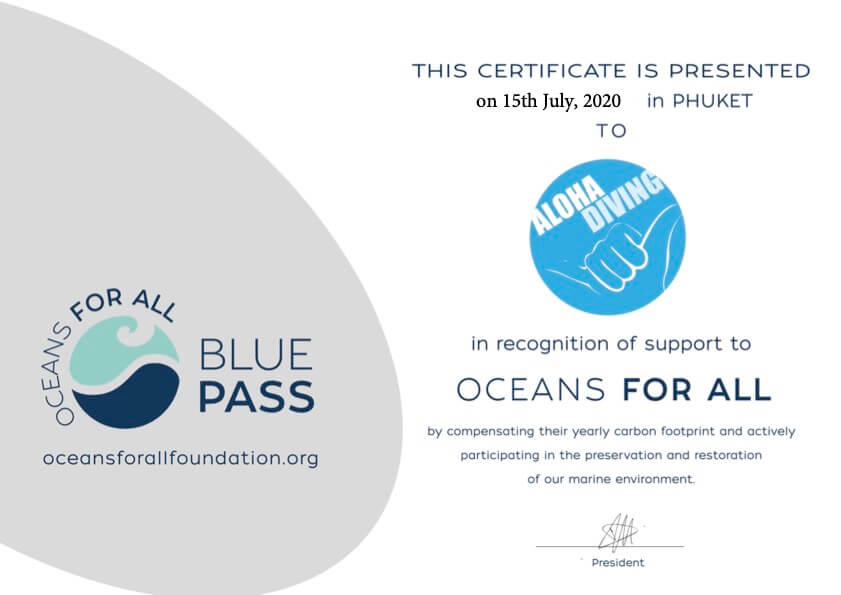
Since 2019, we have compensated those emissions through the BluePass programme of Phuket-based Oceans For All.

See the certificates ↓

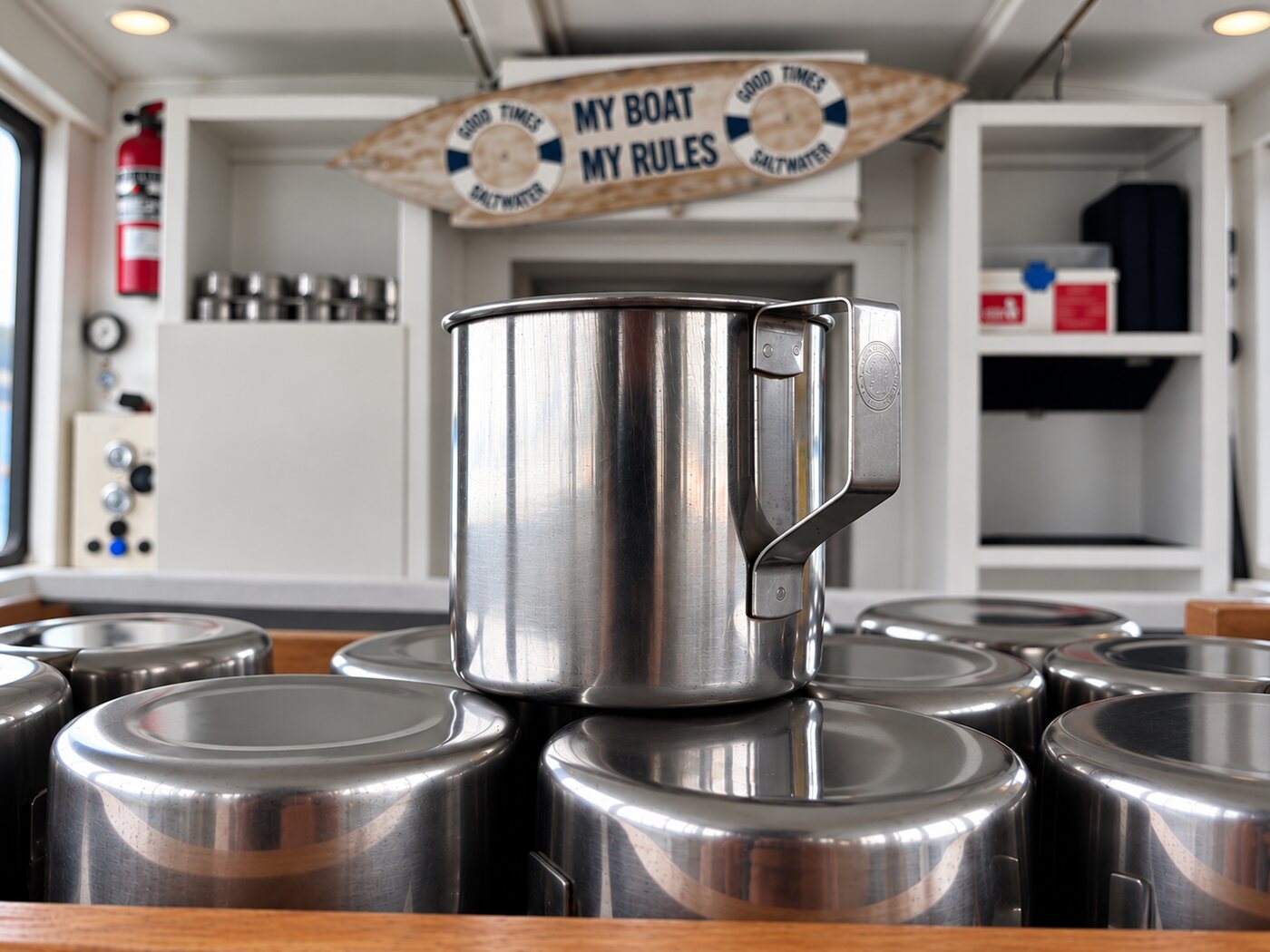
Stainless-steel cups and a pot stacked in the boat's pantry under the My Boat My Rules sign

The little things add up

Not every sustainable choice needs a certificate.

On board, we avoid single-use plastic wherever we can, use reusable stainless-steel cups and choose paper packaging instead of Styrofoam. The cleaning products we use on the boat are biodegradable too.

We take the same approach with our dive equipment. Faded colours and a few scratches aren't a reason to throw perfectly good gear away. We check, service and repair our equipment, and replace it when it really has reached the end of its life.

Looking new and working properly aren't the same thing.

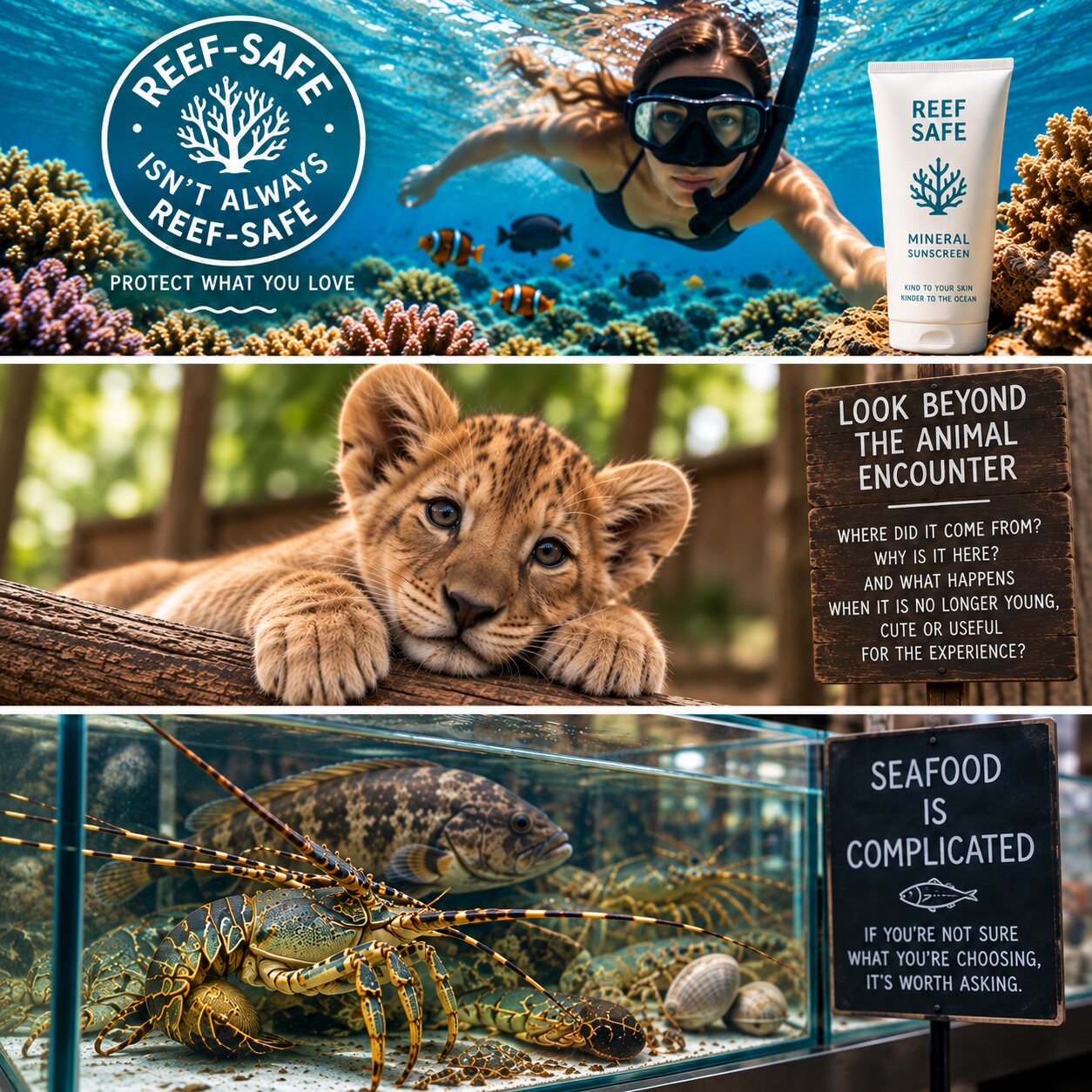
Three panels: a snorkeller beside a reef-safe sunscreen note, a lion cub with the words look beyond the animal encounter, and lobsters in a restaurant tank with the words seafood is complicated

A few things worth knowing

Some sustainable choices aren't quite as obvious as they look.

“Reef-safe” doesn't necessarily mean reef-safe — Don't rely on the label alone. Covering up is the simplest option; when sunscreen is needed, look at what's actually in it and favour mineral-based protection.

Look beyond the animal encounter — Seeing a wild animal up close can be tempting, but it's worth asking how it got there. Where did the animal come from? Why is it being kept there? And what happens when it is no longer young, cute or useful for the experience?

Seafood is complicated — As divers, we sometimes recognise marine life in restaurant tanks that we rarely get to see underwater. It doesn't necessarily mean they're protected or endangered, but it does make us stop and wonder why they're on the menu. If you're not sure what you're choosing, it's worth asking what it is and where it came from.

The paperwork

Certificates aren't the interesting part. They're just the part you can check.

Green Fins

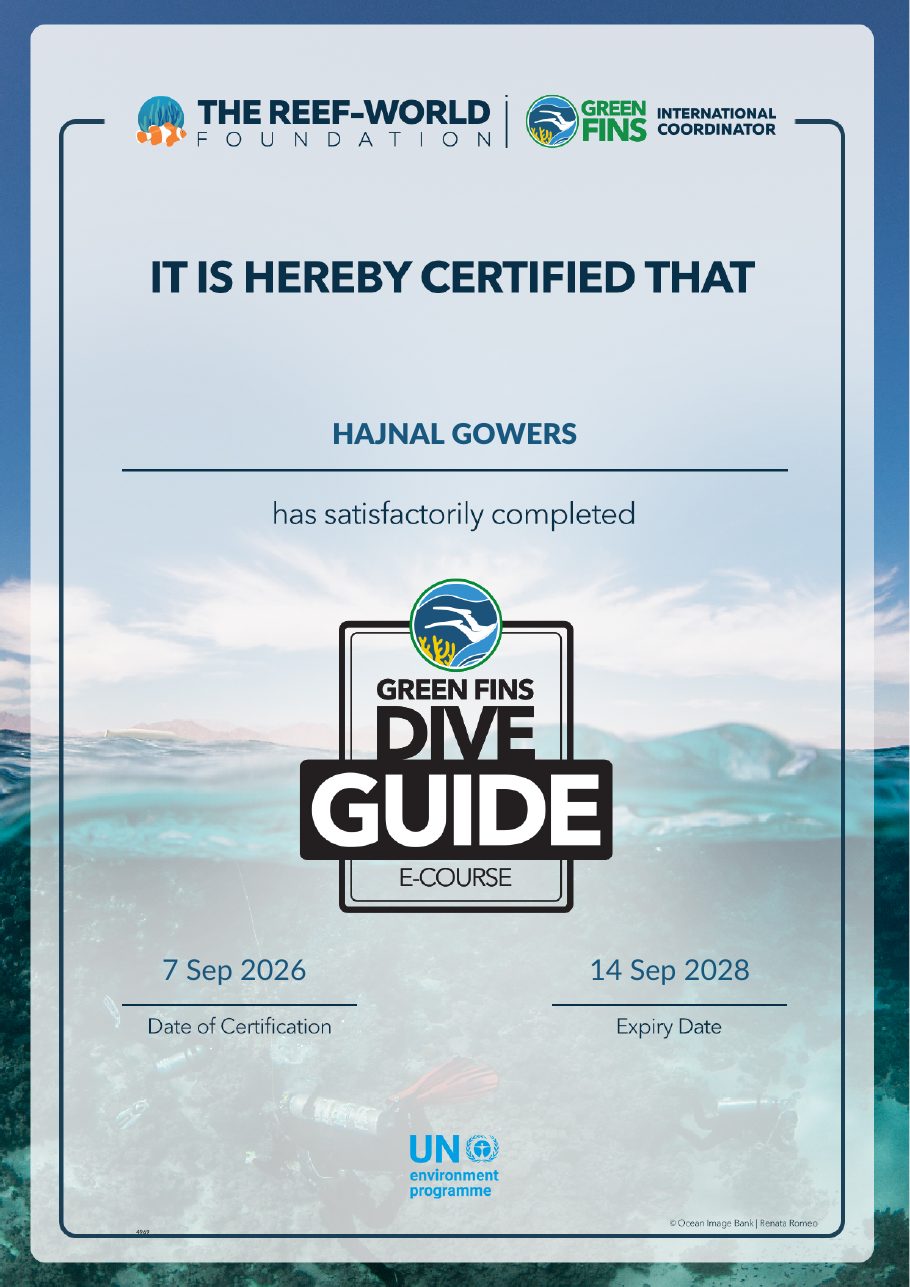
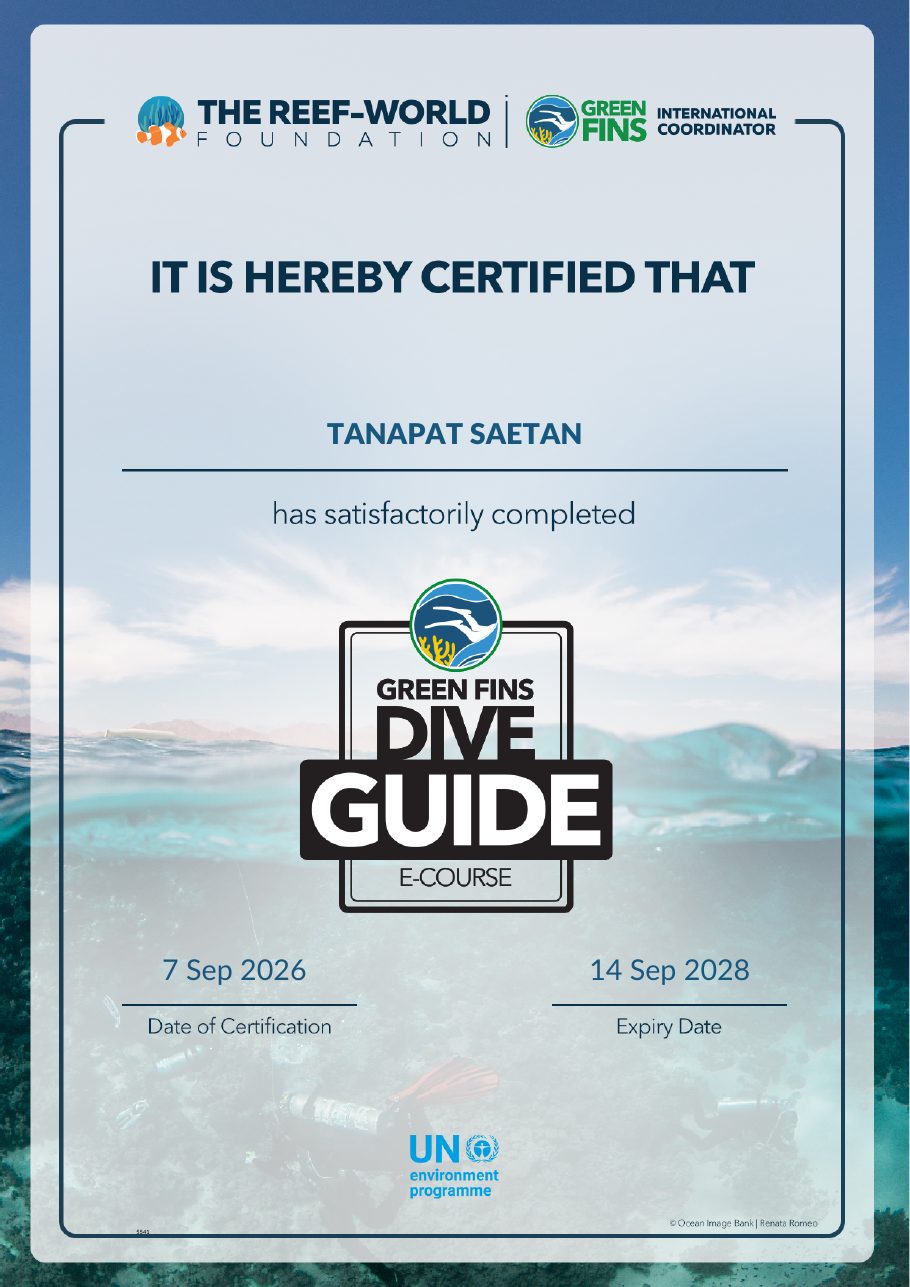
Green Fins Dive Guide e-course certificate for Hajnal Gowers, certified 7 September 2026, valid to 14 September 2028
Dive Guide e-course · Hajnal · valid to September 2028
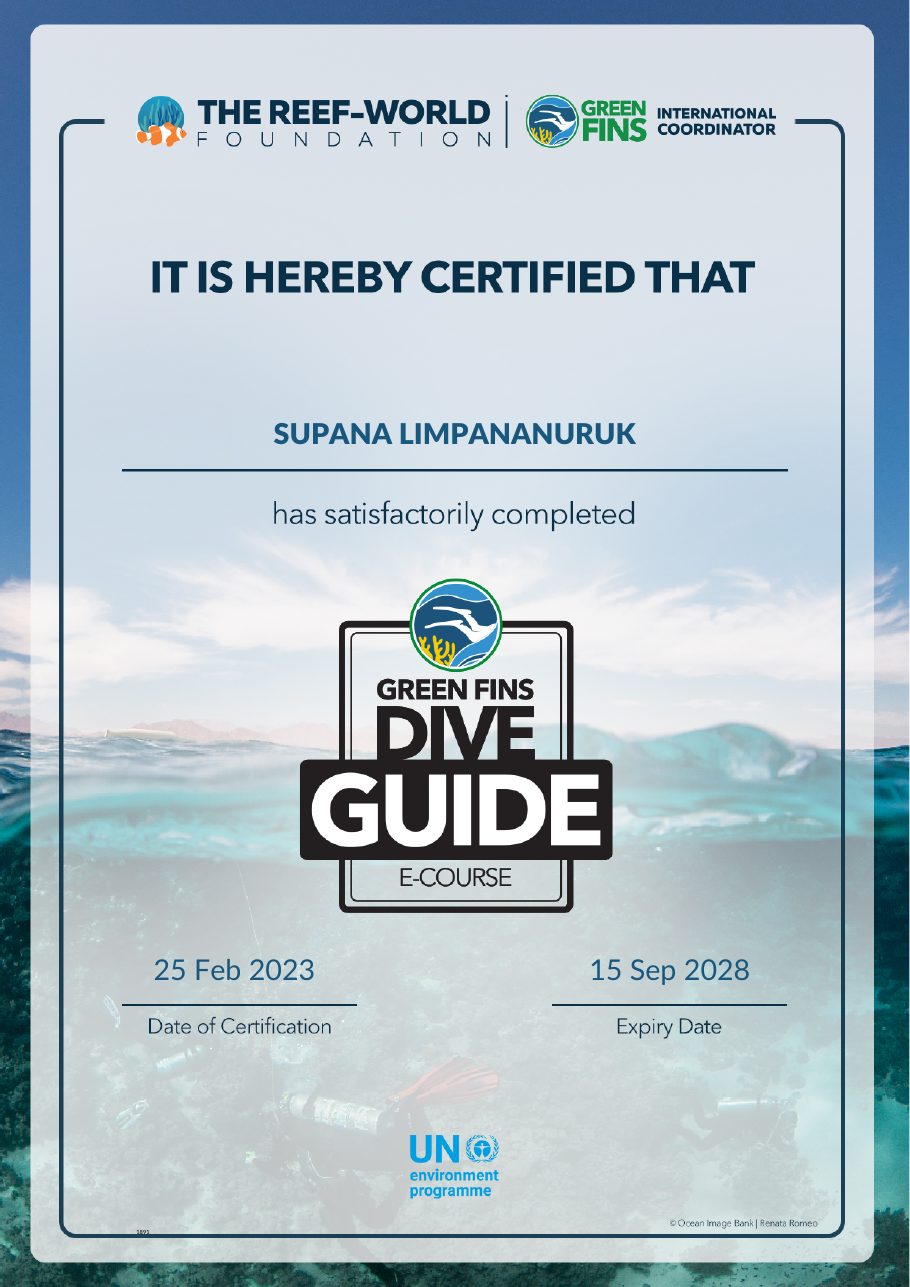
Green Fins Dive Guide e-course certificate for Bew, valid to 14 September 2028
Dive Guide e-course · Bew · valid to September 2028
Green Fins Dive Guide e-course certificate for Mona, valid to 14 September 2028
Dive Guide e-course · Mona · valid to September 2028
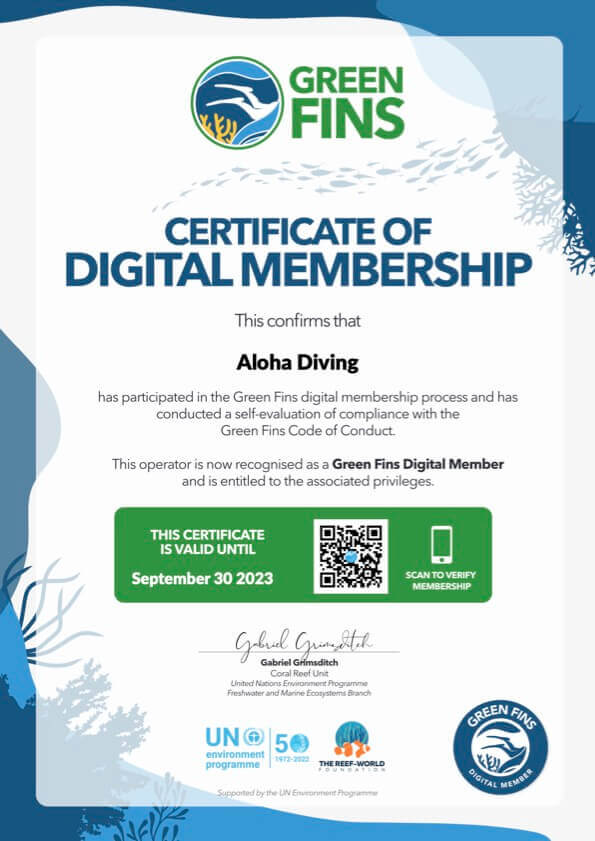
Green Fins certificate of digital membership for Aloha Diving, valid until 30 September 2023
Certificate of membership · Aloha Diving · 2022–2023

Oceans for All

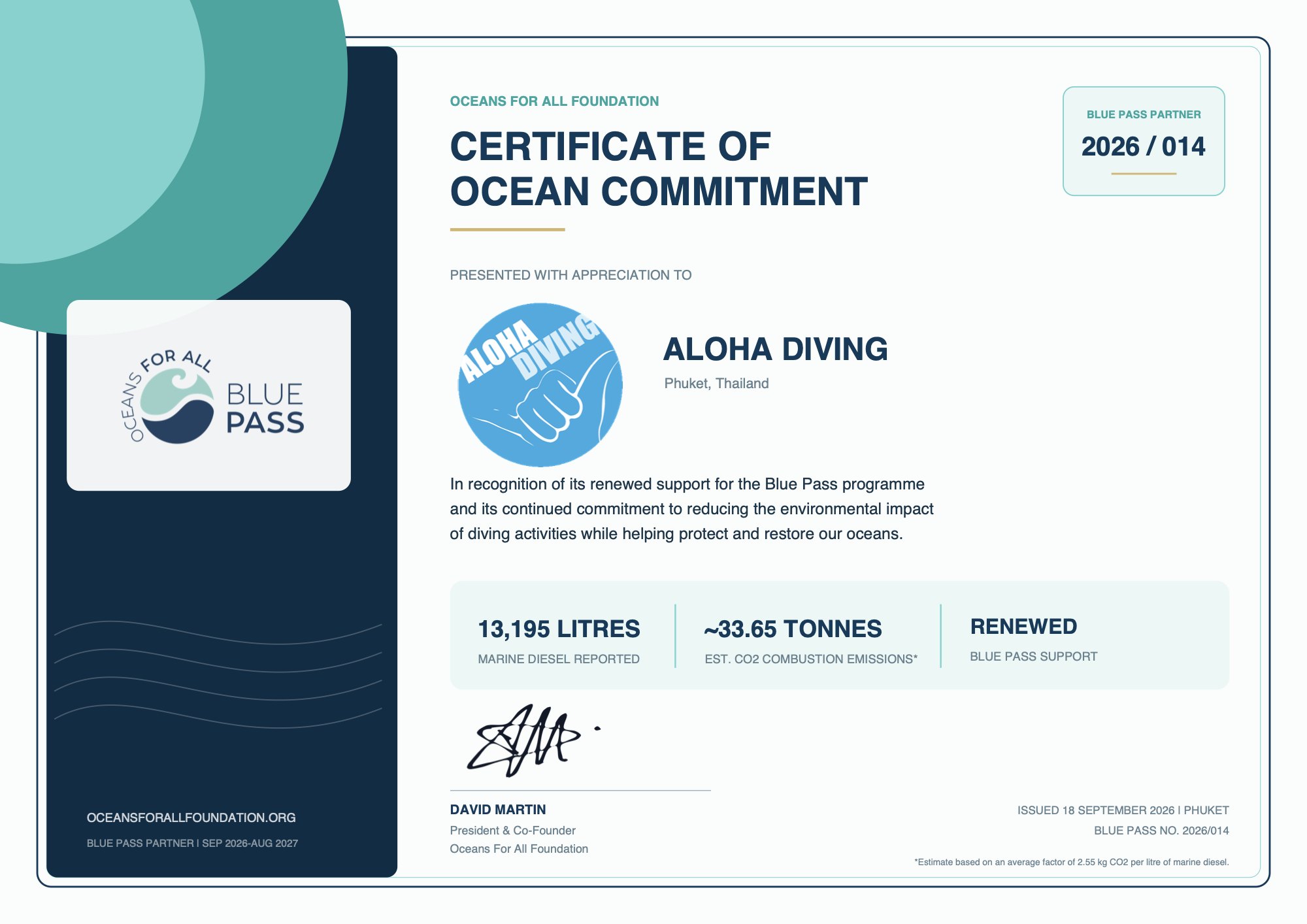
Oceans For All certificate of ocean commitment 2026 for Aloha Diving, Blue Pass partner from September 2026 to August 2027
BluePass · 2026
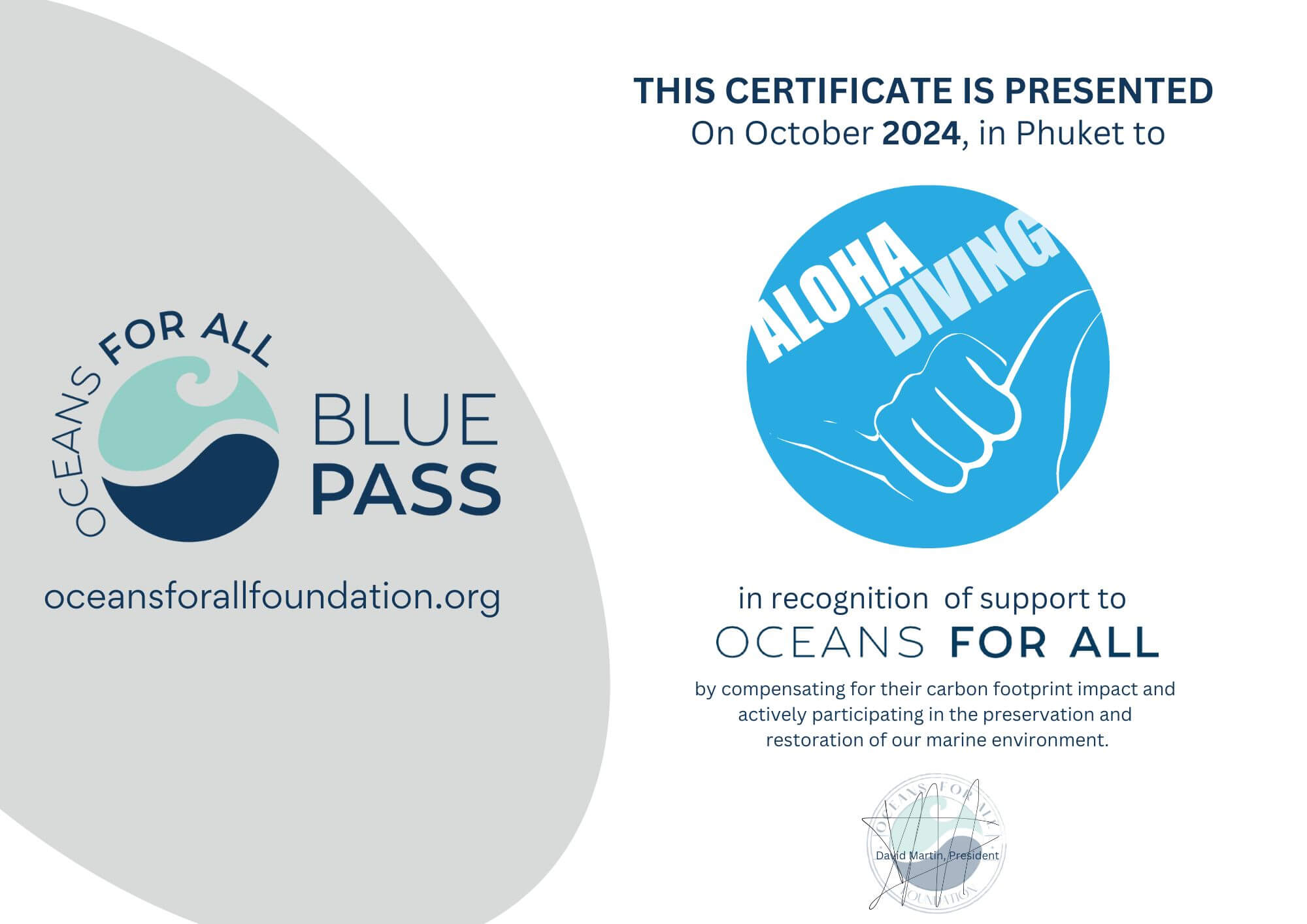
Blue Pass carbon-offset certificate 2024 for Aloha Diving
BluePass · 2024
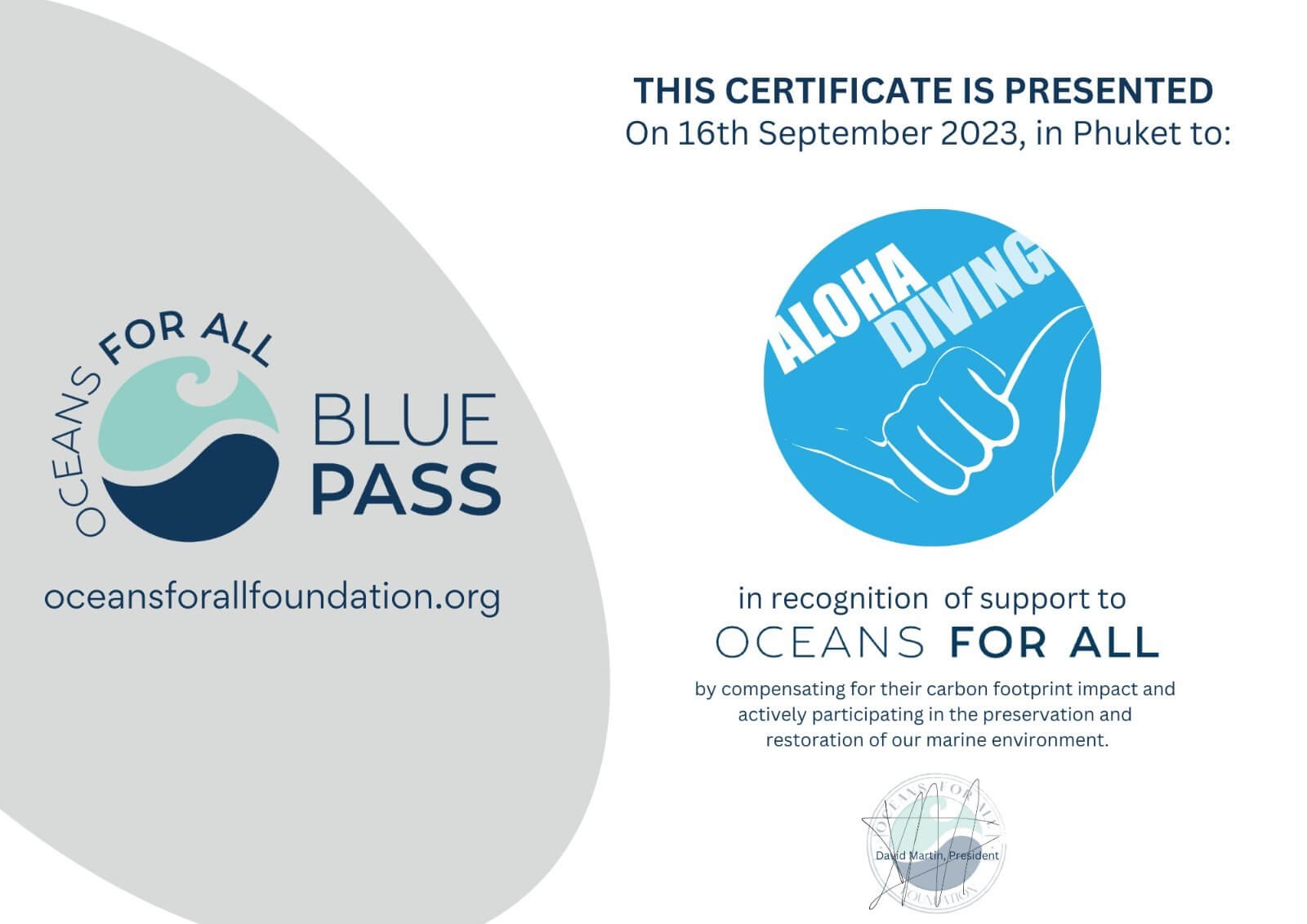
Carbon compensation and CO2 offset certificate 2023 for Aloha Diving
Carbon compensation · 2023
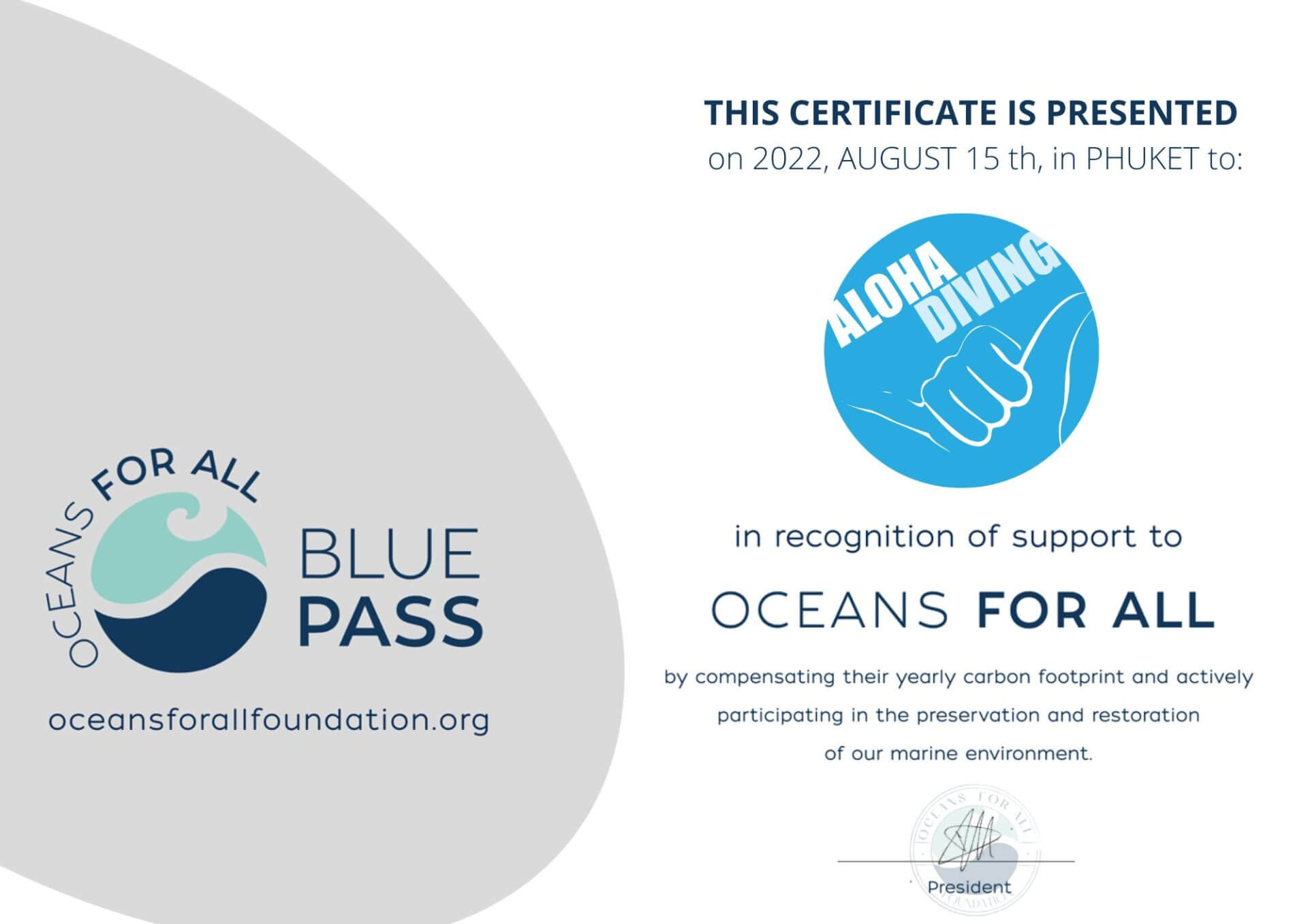
Blue Pass carbon-offset certificate 2022 for Aloha Diving
BluePass · 2022
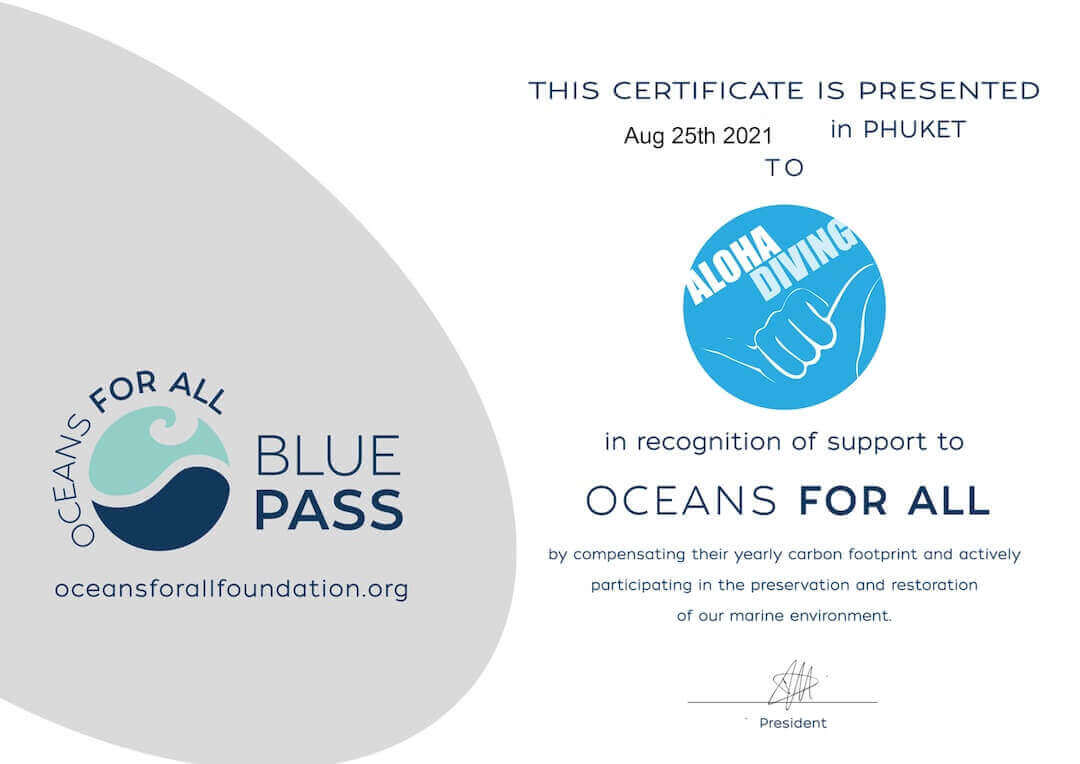
Blue Pass carbon-offset certificate 2021 for Aloha Diving
BluePass · 2021
Blue Pass carbon-offset certificate 2020 for Aloha Diving
BluePass · 2020

PADI

PADI Eco Center certification badge
Eco Center · since 2023
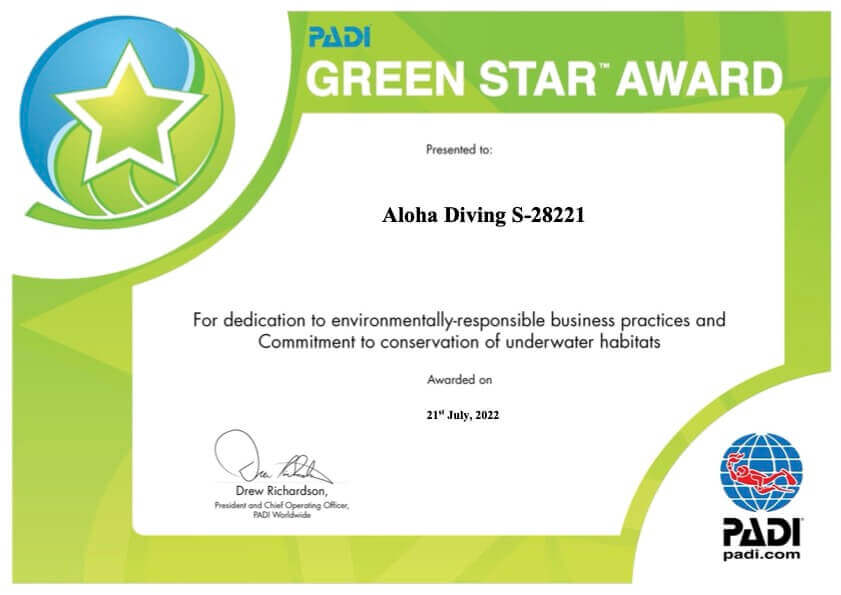
PADI Green Star Award certificate for Aloha Diving
Green Star Award · 2022

It's part of every dive.

The small choices are already part of the way we dive. You just have to come along.

Chat with us